

Expert analysis at the RDS event highlights the urgent need for operational roadmaps to translate policy commitments into faster drug access
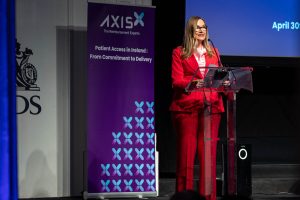
Stakeholders attending the AXIS Patient Access Conference at the RDS in Dublin on Thursday, April 30th, heard that a change management plan must be agreed to ensure Ireland meets its 180-day reimbursement target.
Speaking at the event, AXIS CEO Brenda Dooley said the recent high-level commitment to the shortened timeline for innovative medicines is a landmark step. However, she insisted that its success now hinges on the urgent implementation of a comprehensive operational roadmap.
“There is genuine momentum behind the Framework Agreements between industry and State. Within this, there is a firm commitment to achieving a 180-day reimbursement decision timeline by Q1 2029, in line with the legislation. But now the real work begins. We must activate the change programme, resource the system appropriately, and critically, build trust and predictability for all parties,” she added.
For the last 10 years, it has been taking an average of 600 days for new medicines to become available to public patients in Ireland. Crucially, this week’s conference brought together key stakeholders from across the Irish healthcare system. There was widespread consensus that all players – within the health service, patient organisations, clinicians, academia, industry and government – have a role to play in shaping solutions that are both ambitious and deliverable.
Among other key topics at the conference were the commitments in the Programme for Government to increase the number of clinical trials and explore new approaches to enable earlier reimbursement for certain treatments. There was a particular focus on early access schemes for rare diseases, with representatives from Debra Ireland welcoming the availability of a new drug from this morning (Friday).
There was also much discussion on the importance of accessing innovative oncology treatments in Ireland, with assurances of working towards a more co-ordinated approach at a European level.
On a strategic level, the conference heard that Ireland must be seen as a country where companies will choose to launch new medicines. “We should not be bypassed or be an afterthought. We should be considered early in the rollout. When Ireland is viewed as a credible launch country, patients benefit sooner, clinicians have earlier options, and our health system becomes a more attractive partner for research and innovation,” said Ms Dooley.
Continuing, she pointed to the National Life Sciences Strategy being developed. “This presents an important opportunity for Ireland to consolidate its strengths as a global leader in health innovation, by supporting collaboration, unlocking future opportunities, and making sure that our shared focus stays firmly on patient benefit.”